Figure for Fashion Brush Stamp Procreate: A Practical Evaluation for Designers
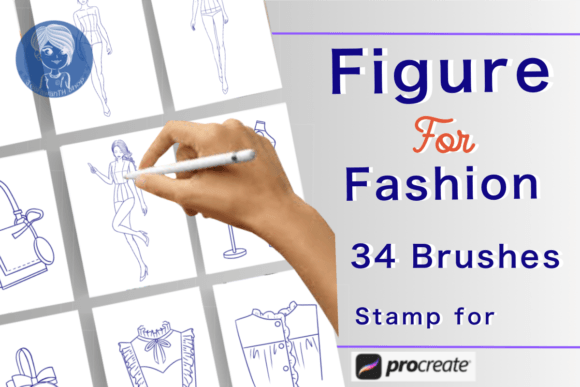
Digital fashion illustration has evolved significantly, moving from rigid vector lines to fluid, expressive strokes that capture the essence of movement and texture. For artists working within the iPad ecosystem, the Figure for Fashion Brush Stamp Procreate represents a specialized tool designed to streamline the creation of fashion sketches. This resource is not merely a collection of generic shapes; it is a curated set of 34 brushes specifically engineered to address the unique challenges of rendering human figures, clothing details, and accessories in a digital environment. Understanding its capabilities, limitations, and place within the broader landscape of digital art tools is essential for designers seeking to optimize their workflow.
Defining the Core Functionality
The primary distinction of the Figure for Fashion Brush Stamp Procreate lies in its dual approach to illustration: combining pre-defined stamp elements with customizable line work. Unlike standard brushes that require the artist to draw every curve of a limb or fold of fabric from scratch, this set provides a foundational library of human figures. These stamps serve as rapid placeholders or base structures upon which detailed designs can be layered. The set includes specific tools for adding intricate details, such as clothing textures, handbags, sunglasses, and other luxury accessories, allowing for a cohesive visual language without constant redrawing.
This functionality addresses a common bottleneck in fashion design: the time-consuming process of sketching repetitive poses. By utilizing the figure stamps, an artist can quickly populate a canvas with multiple models in various stances. Once the pose is established, the included line art brushes allow for the refinement of anatomy or the addition of garment specifics. The integration of accessory-specific brushes further enhances the utility, enabling the immediate application of high-end details that might otherwise take significant time to render manually. The result is a workflow that balances speed with artistic control.
Comparative Analysis: Stamps Versus Freehand Techniques
When evaluating the Figure for Fashion Brush Stamp Procreate against traditional freehand methods or alternative digital resources, several tradeoffs become apparent. Traditional freehand drawing offers unlimited flexibility and organic variation, ensuring that no two lines are identical. However, this freedom comes at the cost of efficiency. For professionals who need to generate multiple iterations of a design quickly—such as during a trend forecasting session or a client presentation—the manual process can be prohibitive.
In contrast, the brush set prioritizes efficiency. The use of stamps ensures consistency in proportion and posture across different sketches. This is particularly valuable when creating mood boards or technical flats where uniformity is required. However, reliance on stamps can sometimes lead to a "cookie-cutter" appearance if the artist does not sufficiently customize the output. The key difference lies in the user's intent: if the goal is pure artistic expression and unique character design, freehand techniques may remain superior. If the objective is rapid prototyping and commercial fashion illustration, the structured approach of the Figure for Fashion Brush Stamp Procreate offers a distinct advantage.
Furthermore, compared to general-purpose brush packs available in the Procreate store, this set is niche-focused. General packs often include a wide array of textures and media types but lack the specific anatomical references needed for fashion. While they are versatile, they do not provide the targeted solution for rendering the human form in clothing. The Figure for Fashion Brush Stamp Procreate fills this gap by offering a dedicated suite of tools tailored to the industry's specific requirements.
Evaluating Strengths and Limitations
The strengths of this brush set are rooted in its comprehensive nature and ease of use. With 34 distinct brushes, the library covers a broad spectrum of needs, from basic figure outlines to complex accessory details. The inclusion of specific tools for items like handbags and sunglasses allows designers to enhance the luxurious feel of their illustrations instantly. This reduces the cognitive load on the artist, who can focus on color theory, fabric drape, and overall composition rather than getting bogged down in the mechanics of drawing a shoe or a bag strap.
However, there are inherent limitations to consider. The most significant constraint is the potential for rigidity. Because the figures are based on stamps, altering the pose beyond the preset options requires additional effort, such as warping or masking, which can introduce artifacts if not done carefully. Additionally, while the set is excellent for stylized or semi-realistic fashion illustration, it may not suit hyper-realistic portraiture where subtle muscle definition and skin texture are paramount. The style of the brushes dictates the aesthetic of the final piece; users must ensure that the built-in style aligns with their brand identity or project requirements.
Another consideration is the learning curve associated with integrating these stamps into a seamless workflow. While the brushes are intuitive, achieving a natural look requires skill in layering and blending. Simply stamping a figure and coloring it flat will result in a disjointed image. The true value is realized when the artist uses the line art brushes to bridge the gaps between stamped elements, creating a unified illustration that feels hand-drawn despite its digital origins.
Ideal Use Cases and Decision Factors
Determining whether the Figure for Fashion Brush Stamp Procreate is the right choice depends heavily on the specific demands of the project. It is an ideal resource for fashion students learning proportion and structure, as the stamps provide a reliable reference for anatomy. For professional illustrators working under tight deadlines, such as those preparing collections for seasonal shows or e-commerce catalogs, the speed gained from using these tools can be transformative. It allows for the rapid generation of concepts that can then be refined or discarded without wasting hours on initial sketches.
Conversely, this tool may not be the best fit for artists specializing in editorial illustration where unique character design and emotional storytelling are the primary focus. In these scenarios, the standardized nature of the stamps might hinder the development of a distinctive visual voice. Similarly, if a project requires highly technical, precise engineering drawings of garments, the stylistic nature of these brushes might be less effective than vector-based software solutions.
Decision factors should also include the artist's proficiency with Procreate. While the brushes are designed to be user-friendly, maximizing their potential requires a solid understanding of layers, opacity settings, and blending modes. Beginners might find the variety overwhelming initially, whereas experienced users can leverage the full range of features to create sophisticated compositions. Ultimately, the decision rests on balancing the need for speed and consistency against the desire for total creative autonomy.
Implementation Strategies for Optimal Results
To get the most out of the Figure for Fashion Brush Stamp Procreate, a strategic approach to implementation is recommended. Start by selecting a base figure stamp that closely matches the desired pose. Avoid forcing a stamp into a position that contradicts its natural flow, as this can make the final illustration look awkward. Once the figure is placed, utilize the line art brushes to add necessary details, such as facial features or specific garment seams. This hybrid method preserves the speed of the stamp while injecting the personal touch of freehand drawing.
Enhancing the luxurious feel mentioned in the product description involves careful use of the accessory brushes. Instead of applying them randomly, consider how lighting and shadow interact with the materials. For instance, a handbag brush might be used to outline the shape, followed by a softer brush to suggest the texture of leather or fabric. Layering is crucial here; placing the figure on one layer and the accessories on another allows for non-destructive editing, enabling adjustments to the composition without compromising the integrity of the original sketch.
Furthermore, experimenting with opacity and pressure sensitivity can help blend the stamped elements seamlessly with hand-drawn additions. Reducing the opacity of a stamp slightly before drawing over it can create a more integrated look, preventing the "sticker" effect. By treating the brushes as components of a larger system rather than standalone solutions, artists can produce work that is both efficient and aesthetically compelling.
Final Considerations for Digital Artists
The Figure for Fashion Brush Stamp Procreate occupies a specific niche within the digital art toolkit, offering a pragmatic solution to the challenges of fashion illustration. Its value proposition is clear: it accelerates the design process while maintaining a level of detail suitable for professional presentations. However, like any tool, it is most effective when used with intention and an understanding of its constraints. It excels in scenarios requiring volume, consistency, and speed, making it a powerful asset for commercial designers and students alike.
For those weighing alternatives, the choice ultimately comes down to the balance between efficiency and customization. If the workflow demands rapid iteration and the ability to visualize multiple concepts quickly, this brush set provides a robust framework. If the project demands absolute uniqueness and deep exploration of individual character traits, supplementing these tools with freehand techniques or other resources may be necessary. By understanding the strengths and tradeoffs, artists can integrate the Figure for Fashion Brush Stamp Procreate into their practice in a way that enhances their creativity rather than limiting it.